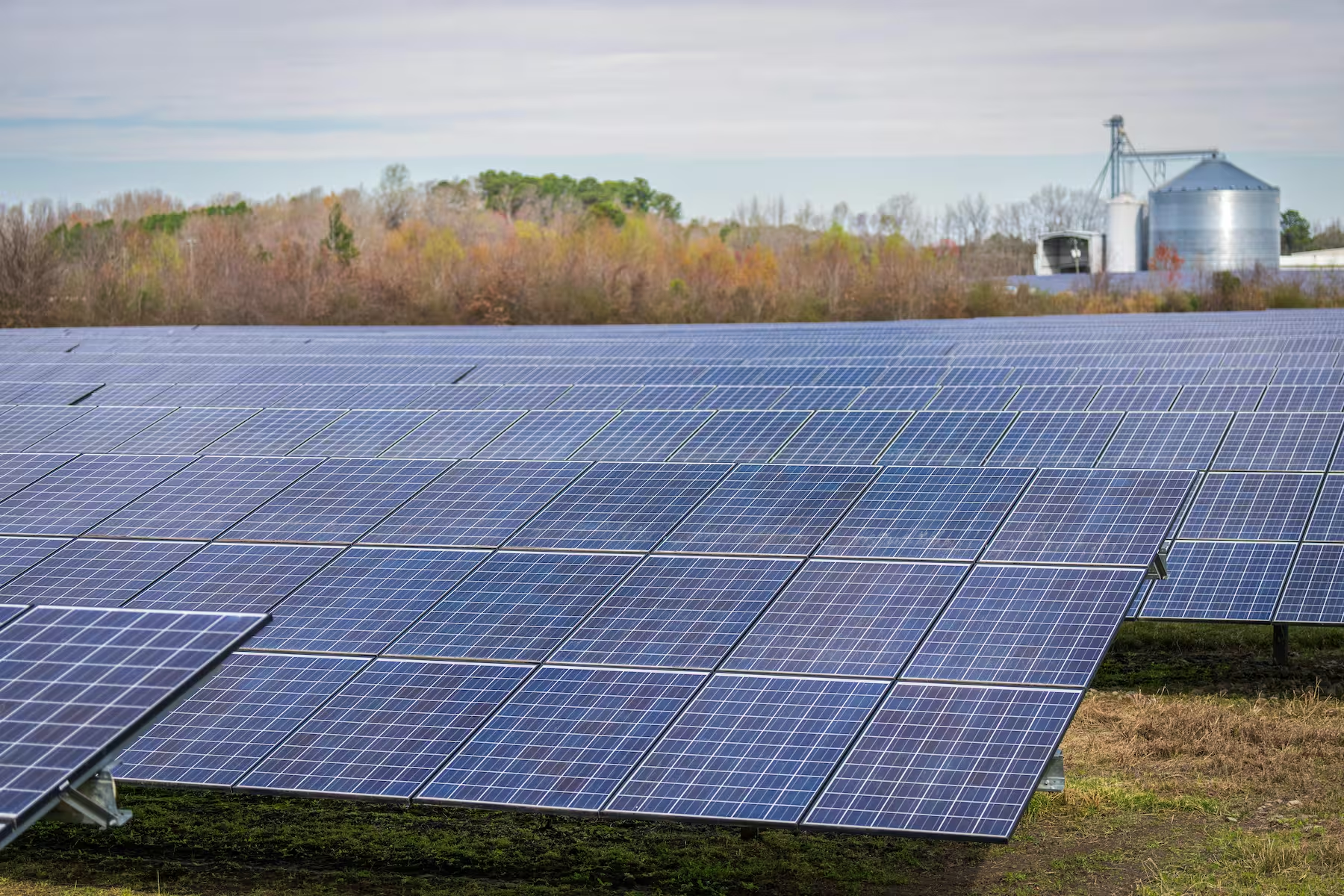
Norfolk’s agricultural community is facing a growing dilemma as economic forces push increasing amounts of prime farmland into long-term leases for utility-scale solar farms. What many see as a lucrative opportunity for landowners is also generating concern about the impact on farming livelihoods, food production, and rural landscapes.
Economic Realities Driving Land Use Decisions
Farmers in Norfolk are being offered significant annual rent to lease productive agricultural land to solar developers. According to local parish council information, these rates can start at around £1,000 per acre per year, index-linked over multi-decade leases — a sum that can amount to hundreds of thousands of pounds per annum for larger holdings. hempnallpc.org
With the cost pressures facing modern agriculture — including input costs, labour constraints and falling margins — some landowners find these offers too compelling to reject. For many, the long-term guaranteed income from a solar lease provides financial security they cannot otherwise achieve from traditional crops. Yahoo News UK
Community Friction and Planning Concerns
Not all local residents and farmers view this shift positively. Campaigners and parish councils argue that Norfolk’s open countryside and productive land are being lost to sprawling solar developments. In many cases, planning decisions for large solar farms bypass local authority control because they are treated as Nationally Significant Infrastructure Projects (NSIPs), a process that can reduce community influence. The Guardian
Opposition groups, such as Block East Pye Solar, have mobilised local events and campaigns to raise awareness of the cumulative impact of solar panels across thousands of acres and the transformative effect this has on rural life. dissexpress.co.uk
Wider Impact on Food Production and Land Security
Critics of the trend argue that taking productive farmland out of food production could have implications for UK food security. Research demonstrates that a significant proportion of large solar sites nationally are situated on fertile agricultural land rather than brownfield sites or rooftops. CPRE
This has sparked debate about whether government energy policy and grid-connection incentives are inadvertently encouraging land use changes that favour renewable energy generation at the expense of agricultural output — a critical concern for regions where farming remains a core economic activity.
Balancing Diversification with Long-Term Planning
For some farmers, leasing land for solar farms is part of a diversification strategy. It provides stable income and can safeguard family businesses through volatile agricultural cycles. However, there is a trade-off: typical solar lease terms can extend for decades, potentially limiting future agricultural uses and binding several generations of farm succession planning to non-farming land use. Farm and Dairy
The Path Forward for Norfolk’s Rural Land Market
The situation in Norfolk encapsulates a broader national policy tension: rapidly scaling renewable energy versus preserving agricultural land and rural community autonomy. How this balance is struck — through planning reforms, community engagement, and strategic landowner decisions — will shape the county’s landscape for years to come.
Want deeper insights into land use trends, valuations, and income-diversification opportunities like solar leasing? Visit Landlister for expert analysis, marketplace data, and guidance tailored for farmland owners and investors.