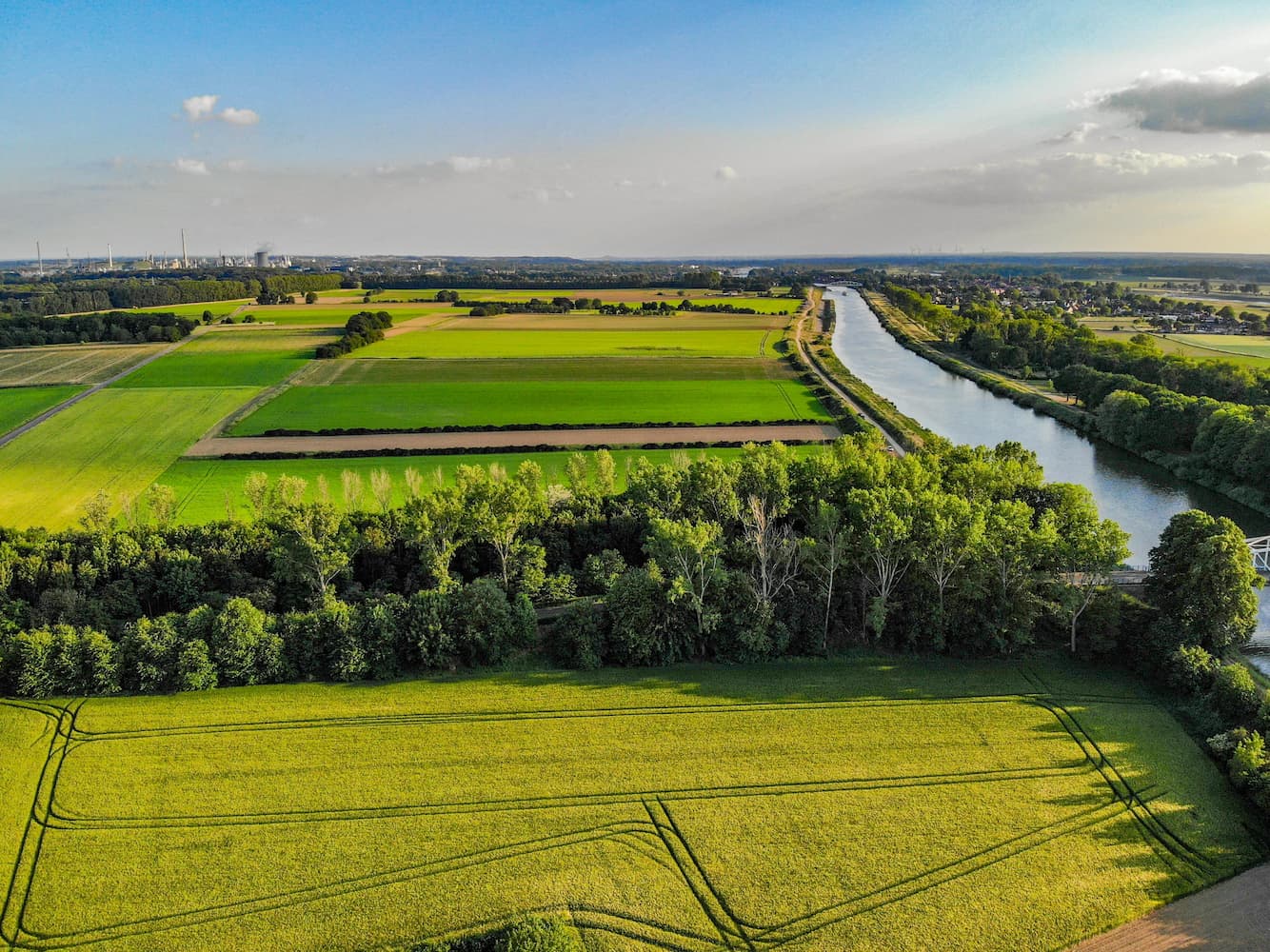
The UK government's newly published Land Use Framework for England (2026) emphasizes integrated land management for food security, energy efficiency, and environmental goals, marking a pivotal moment for sustainable agriculture and potential land repurposing. For the first time, glasshouse horticulture is explicitly recognized in national land use strategy, linking it to energy infrastructure and spatial planning. This framework, stemming from a March 2025 DEFRA consultation, prioritizes multi-functional land use amid growing pressures on England's finite resources.
Core Principles and Goals
The framework promotes coordinated spatial planning to optimize land for multiple outcomes, including robust food production, renewable energy integration, and biodiversity enhancement. It pledges sustainable food systems while addressing competing demands like housing, forestry, and renewables, urging a "right place, right use" approach.
Greenhouse horticulture, despite using under 0.1% of UK food production land, is highlighted for its high yields and synergy with waste heat, CO₂ sources, and infrastructure—mirroring efficient models like the Netherlands. Dr. Sven Batke of the Greenhouse Innovation Consortium (GIC) notes this as a "broader change" in policy viewing controlled environment agriculture holistically.
Implications for Horticulture and Agriculture
The document signals stronger government intent for a coordinated UK horticulture strategy, moving beyond isolated discussions to tie it with productivity and land efficiency agendas. Growers may benefit from better siting near energy assets, including brownfield or constrained sites unsuitable for field crops but ideal for high-output greenhouses.
Traditional farming faces calls for intensification on prime land, while lower-grade areas could shift to horticulture, agroforestry, or bioenergy crops. GIC's consultation input on integrating horticulture with energy systems appears reflected, paving the way for supportive policies and investments.
Land Use Pressures and Opportunities
England's land is increasingly contested, with the framework setting directions for planning, incentives, and valuation that favor efficient uses like greenhouses. It acknowledges horticulture's role in food security without dominating the narrative, but positions it advantageously for future projects.
For landowners, this opens doors to diversify holdings—e.g., converting marginal land for greenhouse developments or energy-linked farming, potentially enhancing value through policy-backed viability.
Key Framework Themes | Landlister Relevance |
|---|---|
Multi-outcome land use | Enables mixed residential/agri developments |
Spatial planning & energy integration | Favors sites near infrastructure for greenhouses |
Sustainable food production | Boosts demand for productive rural land |
Brownfield repurposing | Opportunities for urban-fringe horti/agri |
Broader Impacts for Landowners and Developers
While not altering planning overnight, the framework influences land valuation and sector prioritization, encouraging projects that align food production with net-zero goals. In forestry contexts, it balances tree planting with food needs, potentially preserving arable land for high-value uses.
Developers eyeing residential expansion may find synergies in peri-urban zones suitable for integrated agri-horticulture, mitigating pure housing land shortages. Landlister users should monitor forthcoming incentives, as this positions sustainable food infrastructure as a policy winner amid land scarcity.
Sources
DEFRA Land Use Framework pledges sustainable food production: https://www.forestryjournal.co.uk/news/25964495.defra-land-use-framework-pledges-sustainable-food-production/
New UK Land Use Framework puts greenhouse sector on the map: https://www.freshplaza.com/north-america/article/9822431/new-uk-land-use-framework-puts-greenhouse-sector-on-the-map/
DEFRA Land Use Framework (Scottish Farmer mirror): https://www.thescottishfarmer.co.uk/news/25954842.defra-land-use-framework-pledges-sustainable-food-production/