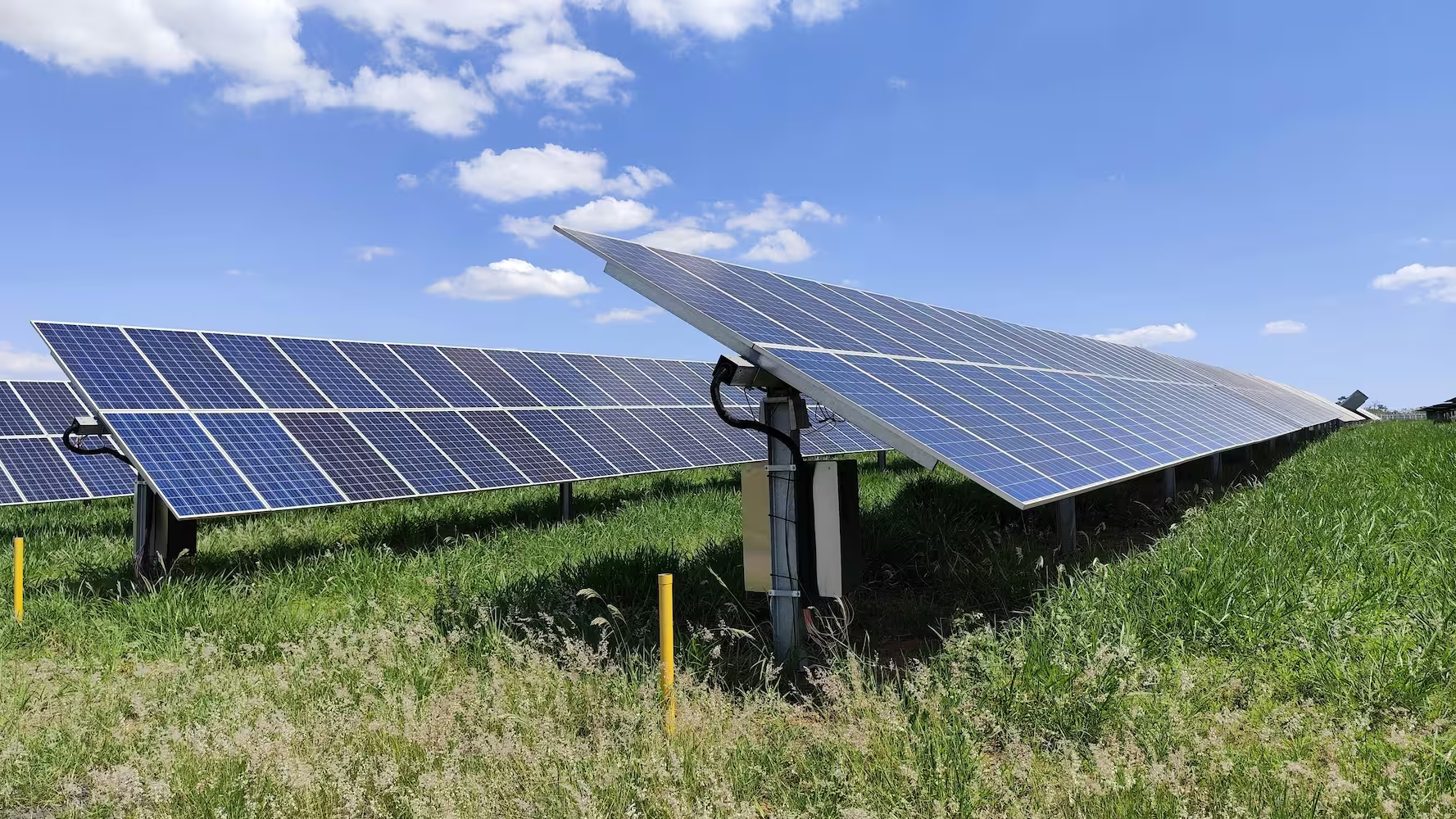
Solar Farms: How to Find Land for a Solar Farm and Start One
Your complete guide to finding suitable land for solar panel fields and starting a solar generation plant in the UK
Solar farms represent one of the fastest-growing renewable energy sectors in the UK, offering landowners significant income opportunities while contributing to the nation's net-zero targets. Whether you're a landowner looking to diversify income or an investor seeking to develop a solar generation plant, finding the right land is crucial. This guide will walk you through everything you need to know about finding land for solar farms and starting your own solar panel field project.
Understanding Solar Farms in the UK
A solar farm, also known as a solar park or solar generation plant, is a large-scale installation of solar panels designed to generate electricity for the grid. These installations typically cover several acres of land and can range from small community projects (under 5MW) to large commercial operations (50MW+). Solar panels on farmland have become increasingly common as landowners seek to diversify income streams while maintaining agricultural use through agrivoltaics.
Key Benefits of Solar Farms
- Long-term income generation (typically 25-40 year leases)
- Diversification of agricultural income
- Contribution to renewable energy targets
- Potential for agrivoltaics (combining solar with agriculture)
- Low maintenance requirements once operational
Finding Land for Solar Farms
Finding suitable land for a solar farm requires careful consideration of multiple factors. The ideal site combines location, topography, grid connection, and planning potential. Here's what to look for when searching for solar farmland:
Location and Size Requirements
Solar farms typically require substantial land areas. As a general rule, you'll need approximately 2-3 acres per megawatt (MW) of capacity. For a 5MW solar farm, you'd need around 10-15 acres, while a 50MW installation might require 100-150 acres. The land should be relatively flat or gently sloping (ideally less than 10% gradient) to minimize installation costs and maximize solar exposure.
When searching for land, platforms like Landlister can help you identify suitable agricultural land, fields, and rural properties that may be suitable for solar development. Look for land that is:
- Located in areas with good solar irradiance (southern England typically receives the most sunlight)
- Free from significant shading from trees, buildings, or hills
- Accessible for construction vehicles and maintenance
- Not subject to flooding or other environmental constraints
Grid Connection and Infrastructure
One of the most critical factors for solar farm development is proximity to the electricity grid. The cost of connecting to the grid can make or break a project's viability. Ideally, your chosen land should be:
- Within 1-2 miles of a suitable grid connection point
- Near existing substations or power lines
- In an area with available grid capacity
Early engagement with the Distribution Network Operator (DNO) is essential to understand connection costs and timelines. Connection costs can range from tens of thousands to millions of pounds depending on distance and required infrastructure upgrades.
Planning Permission and Land Use
Solar farms typically require planning permission from the local planning authority. The planning process considers factors such as:
- Visual impact on the landscape
- Impact on agricultural land quality
- Wildlife and biodiversity considerations
- Heritage and archaeological concerns
- Traffic and access during construction
Agricultural land is often preferred for solar farms, particularly lower-grade agricultural land (Grade 3b and below). However, planning policies vary by local authority, and some areas have restrictions on using high-quality agricultural land for solar development. For more information on planning permission, see our guide on selling land with planning permission.
Starting Your Solar Farm Project
Once you've identified suitable land, starting a solar farm involves several key steps:
1. Site Assessment and Feasibility
Conduct a thorough site assessment including solar irradiance analysis, topographical surveys, environmental assessments, and grid connection feasibility studies. This will help determine the potential capacity and financial viability of your project.
2. Secure Land Rights
Whether you own the land or need to lease it, securing appropriate land rights is essential. Many solar farm developers work with landowners through long-term lease agreements (typically 25-40 years), providing landowners with stable rental income while developers benefit from lower upfront costs.
3. Planning Application
Submit a detailed planning application to your local planning authority. This should include environmental impact assessments, landscape and visual impact assessments, and detailed site plans. Engaging with local communities early in the process can help address concerns and build support.
4. Grid Connection Application
Apply for grid connection through your local DNO. This process can take 12-24 months and involves technical assessments, connection offers, and potentially significant infrastructure costs. Early application is crucial as grid capacity can be limited.
5. Financing and Contracts
Secure financing for your project, which may include equity investment, bank loans, or project finance. You'll also need to negotiate Power Purchase Agreements (PPAs) with energy suppliers or consider selling directly to the grid through the Contracts for Difference (CfD) scheme.
6. Construction and Commissioning
Once all permissions and contracts are in place, construction can begin. This typically takes 6-12 months depending on the size of the project. After construction, the system undergoes commissioning and testing before becoming fully operational.
Agrivoltaics: Combining Solar with Agriculture
An increasingly popular approach is agrivoltaics, which combines solar panels with agricultural activities. This allows landowners to generate renewable energy while maintaining agricultural production. Solar panels can be mounted higher to allow machinery and livestock underneath, creating dual-income streams from the same land.
Common agrivoltaic applications include:
- Sheep grazing under elevated solar panels
- Crop production between panel rows
- Beekeeping and pollinator-friendly planting
- Horticulture in shaded areas
Financial Considerations
Solar farm development requires significant upfront investment. Typical costs include:
- Land acquisition or lease costs
- Solar panel and equipment (typically £400,000-£600,000 per MW)
- Grid connection costs (can vary significantly)
- Planning and legal fees
- Construction and installation
- Ongoing maintenance and insurance
However, solar farms can generate substantial returns over their 25-40 year lifespan, with typical payback periods of 8-12 years. Income is generated through electricity sales, government incentives (where available), and potentially through carbon credits.
Finding Land on Landlister
Landlister provides a comprehensive platform for finding land suitable for solar farm development. You can search by:
- Location and region across the UK
- Land size and acreage
- Land type (agricultural land, fields, rural properties)
- Price range
Our platform includes detailed listings with photos, location maps, and key information to help you identify potential sites for your solar panel field or solar generation plant project.
Key Takeaways
Starting a solar farm requires careful planning and consideration of multiple factors:
- Find land with good solar exposure, minimal shading, and suitable topography
- Ensure proximity to grid connection points to minimize connection costs
- Understand local planning policies and restrictions
- Consider agrivoltaic options to maximize land use
- Engage with local communities and stakeholders early
- Secure appropriate financing and power purchase agreements
With the UK's commitment to net-zero emissions and growing demand for renewable energy, solar farms represent a significant opportunity for landowners and investors alike. By finding the right land and following proper development processes, you can contribute to the UK's renewable energy transition while generating long-term income.
Ready to Find Land for Your Solar Farm?
Start your search for suitable solar farmland today. Browse our extensive listings of agricultural land, fields, and rural properties across the UK.